KETTERINA | 1901-07 | UK :
The Ketterina occupies a genuinely unusual place in the history of British motorcycling, not for what it was technically, but for what it became. Behind a modestly named provincial motor bicycle lies the founding story of one of the world’s most specialised printing press manufacturers.
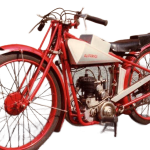
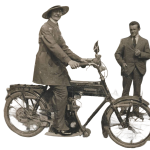
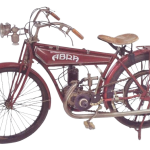
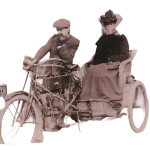
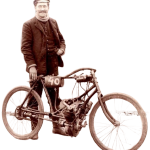
Timsons Ltd was formed in 1896 by Arthur Richardson Timson, who initially repaired shoe machinery in the cellar of his parents’ house in Kettering. It was at Montagu Street in 1898 that three engineers, Arthur Richardson Timson, Charles Bullock, both former employees of Owen Robinson, and Charles Barber, started building pedal cycles, and by 1901 had an engine-driven version, the Ketterina motorcycle.
Kettering in 1901 was a boot and shoe town, not a motorcycle manufacturing centre. Its appearance on any list of British motor bicycle origins is a consequence of the extraordinary spread of engineering entrepreneurship through provincial England in those years, where mechanical skills acquired in one trade were transferred almost naturally into the new business of powered transport. Shoe machinery of the 1890s required precision work and close tolerances, and the three men who built the Ketterina had that background directly.
After repairing shoe machinery, Arthur Timson started to manufacture to his own designs. He also began to sell, repair and produce bicycles, which had become very popular in the 1890s. This led to the development of the Ketterina, a single-speed motorcycle with a small De Dion engine. The De Dion-Bouton unit was the dominant proprietary engine choice for British motor bicycle builders in the early 1900s. The De Dion-Bouton tricycle had been the most successful motor vehicle in Europe from 1897 until 1901, with about 15,000 copies sold, and the fast-running De Dion-Bouton engine set new standards for vehicular motors and is regarded as the precursor of all motorcycle engines. Dozens of British makers from Royal Enfield downward fitted De Dion units in these years, and the Ketterina’s founders were following a well-trodden path in choosing it.
The name itself was a charming piece of local invention, a feminised Latin-style rendering of the town’s name in the manner common to the era, when machines were often named after their places of origin. The Ketterina was Kettering made motor-bicycle, announced with the quiet provincial confidence of a firm that knew its community and its market.
The company moved from Montagu Street to Bath Road in 1903, and the pivot that would define its future was already underway. By 1907 the company was also moving into the printing machinery market. The precision machining skills developed in making motor bicycle engines translated directly and profitably into printing press manufacture, a far larger and more lucrative field. 1929 marked the production of the first Timson web-fed rotary press with in-line folding. The low volume production of presses for books continued through to the 1960s, when the Timson T32 book press was introduced and became the flagship product.
Ernest, the only son of Arthur Timson, joined him in 1920 and together they ran the company until Arthur died in 1954. During this period Timsons established its reputation as a leading manufacturer of web-fed rotary presses, printing letterpress and gravure. Timsons has specialised for over 50 years in the niche market of presses to print books. In recent years, Bungay-based book printer Clays used its Timson presses to produce the complete series of Harry Potter adventures including Harry Potter and the Half-Blood Prince, which sold more than two million copies in the first 24 hours. On 1 July 2006 Timsons celebrated its 110th anniversary, marking the opening of a new 10,000 square foot high bay press assembly shop and receiving the Queen’s Award for Enterprise.
The Ketterina motorcycle, made in a Northamptonshire boot and shoe town between 1901 and 1907 by three former shoe machinery engineers, is the unlikely first chapter of that story.