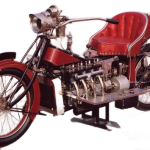
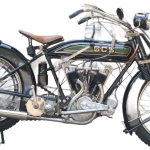
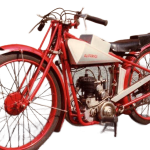
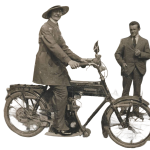
KEATING | 1901 | USA :
Robert M. Keating was born in Springfield, Massachusetts in 1862 to poor Irish immigrants. He was just thirteen when his father died suddenly. A precocious boy with a knack for mechanics, he filed his first patent at twenty-two and started his own bicycle company at twenty-eight.
Robert M. Keating originally started the Keating Wheel Company in Westfield, Massachusetts on September 10th, 1890, after working as superintendent at the Warwick Cycle Company in Springfield and before that with the Overman Wheel Company in Chicopee, Massachusetts. The first Keating Wheel Company factory was a leased space in an existing factory building formerly used by the Westfield Whip Company on Elm Street in Westfield. The factory employed ten men, and by the spring of 1891 the Keating Wheel Company had turned out the first seventy-five Keating bicycles, called “The Superior.”
The company moved to Holyoke, Massachusetts in 1892 but soon found itself in need of even more space as bicycles were a popular commodity in the 1890s. R.M. Keating and his Wheel Company were at the forefront of the transportation revolution, and the success of his bicycle lines required that the company expand again. When word got out that Keating was looking to move, cities and towns from far and wide began to court the company. Following a wave of propositions, it was Middletown, Connecticut that made the most attractive offer, and on the evening of May 23, 1896, an official agreement to relocate the Keating Wheel Company to Middletown was signed.
The Keating Wheel Company worked out of a groundbreaking facility on Johnson Street in Middletown that was the first factory in the country to run on electricity using generators from Thomas Edison’s newly created General Electric Company. Robert M. Keating was also a Massachusetts native with a remarkable range of interests. He was a former pitcher for the 1887 Baltimore Orioles and patented baseball’s first rubber home plate.
By the turn of the century, the Middletown factory was producing both electric and gasoline powered vehicles well before Detroit took the stage. Keating reportedly had five vehicles represented in Middletown’s 250th birthday parade held in October 1900.
In June and July of 1900, Keating filed a series of patents for a motorized bicycle, and by November the first Keating motor bicycle was tested on the company grounds using his patented designs. Those patents would become the industry standard for motorcycle production in America.
The Keating Wheel Company released their motor bicycle onto the market in March of 1901. It was one of the first commercially produced motorcycles in the USA, and it was patented one year before Indian Motorcycle’s first patent. That same year, in the same city, Oscar Hedstrom, under contract with the Hendee Manufacturing Company, leased space at the largely abandoned Worcester Bicycle Manufacturing Company, also in Middletown, to develop a motor bicycle of his own. Hedstrom completed his prototype, which would become the iconic Indian motorcycle, at the end of May. Middletown, Connecticut had effectively become the cradle of the American motorcycle industry.
The company’s commercial moment, however, proved short-lived. The Keating Wheel and Automobile Company ran into serious financial difficulties and went into receivership just as the Keating motor bicycle was put on the market. On June 15, 1901, the Keating factory was sold to the Eisenhuth Horseless Vehicle Company. Over the next year they continued to build and sell the Keating motor bicycle until it was abandoned to make way for production of the Eisenhuth automobile.
More than a decade later, Robert M. Keating went after both Hendee Manufacturing and Harley-Davidson, claiming they had used his ideas in their motorcycles without permission. Keating sued Indian and sued Harley-Davidson for patent infringement, and he won both cases.
At the time of his death at fifty-nine, Keating held 49 patents covering everything from bicycle and motorcycle designs to lunch-chairs to a modern flushing device for toilets. The world’s only known surviving example of a 1901 Keating motorcycle was eventually returned to the hands of the Keating family, and remains a physical record of a chapter in American industrial history that predates the names most people associate with the birth of the motorcycle.