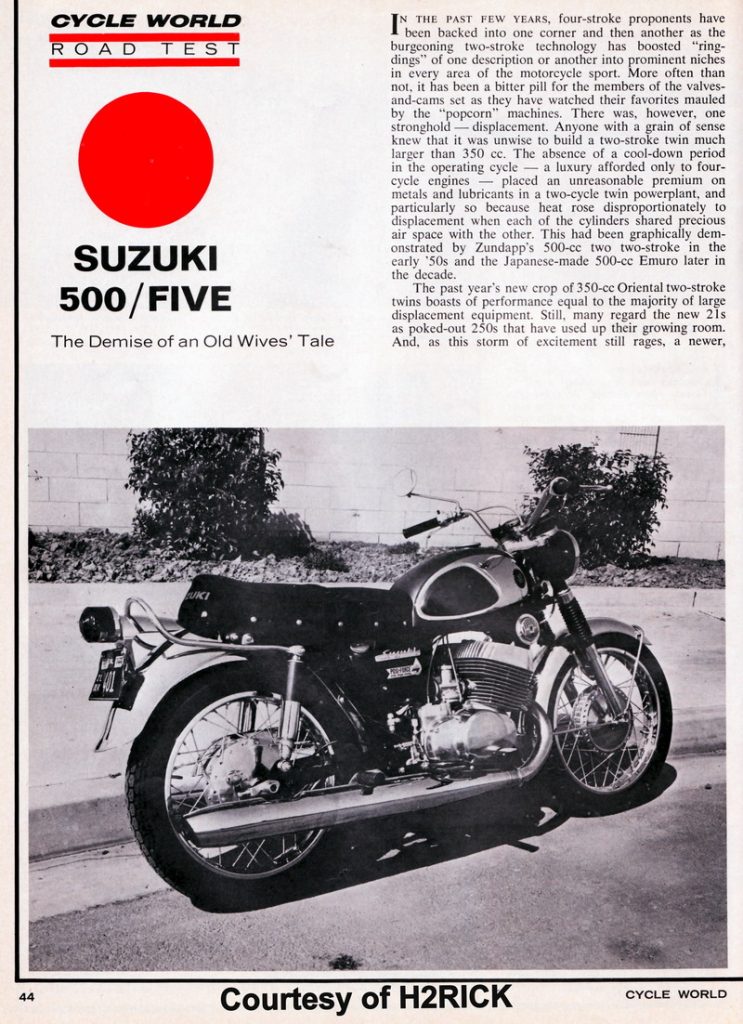
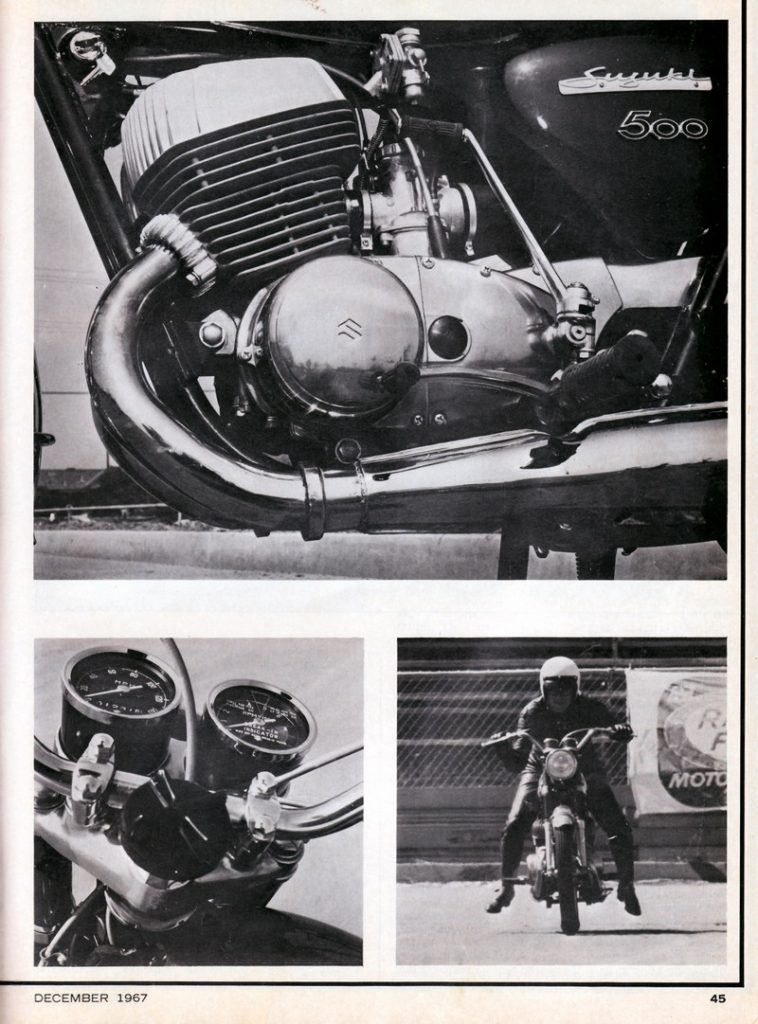
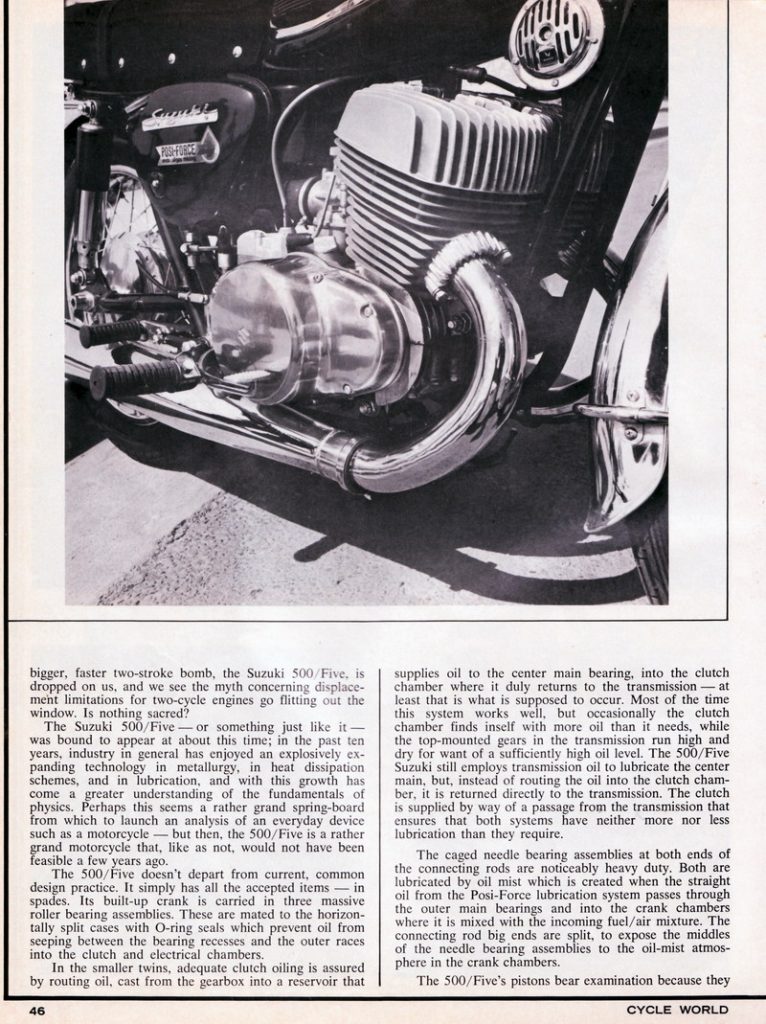
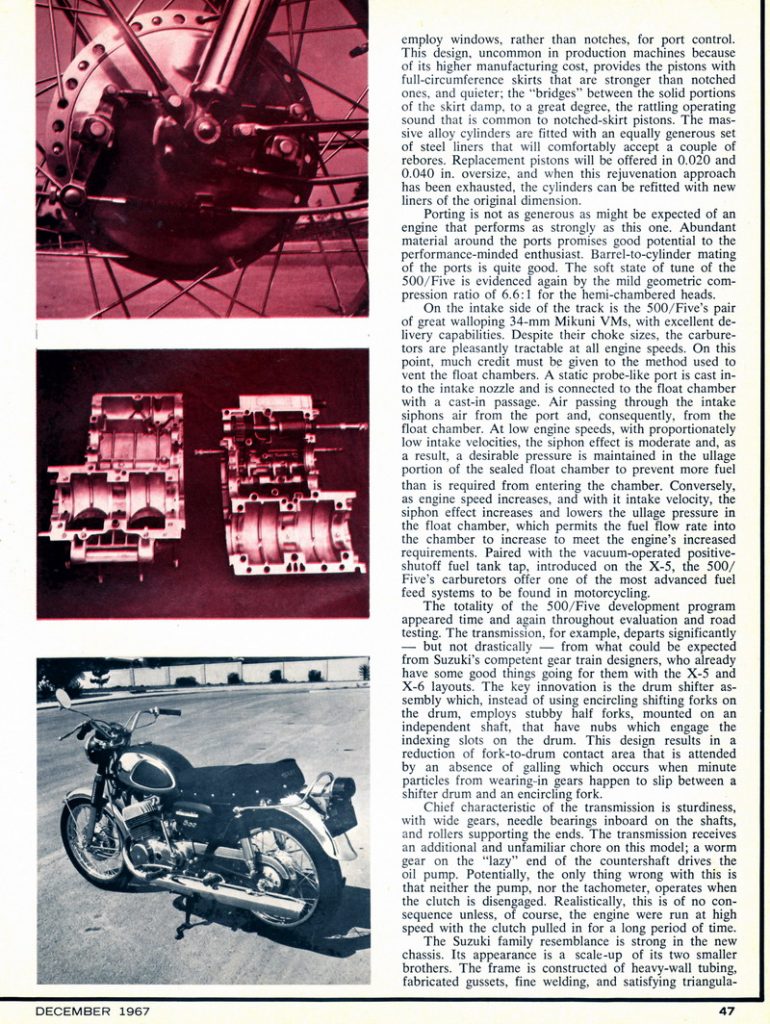
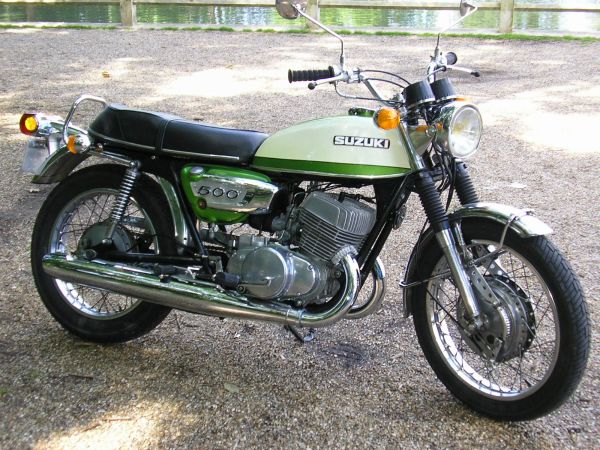
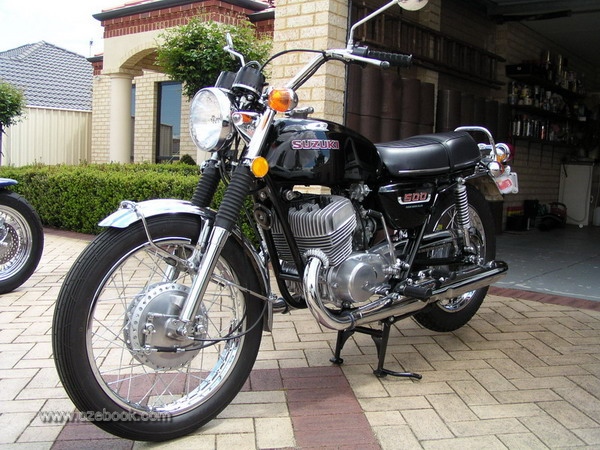
SUZUKI COBRA (T500-1) INTRODUCTION FALL, 1967
Just think….it’s Fall, 1967….a time before a lot of you were born. The world was a lot different then than now, wasn’t it ?? Well….kind of. Canada was celebrating its centennial as a country, the US was getting more deeply involved in Vietnam and the hippies’ “summer of love” in the Haight-
Ashbury district of Fan Francisco was just winding down. If you wanted a big bore motorcycle of 500cc or larger (which an increasing number of young people did), then you bought British-made or a Harley. The largest percentage of Japanese bikes at this time were 305cc or smaller. The bike that
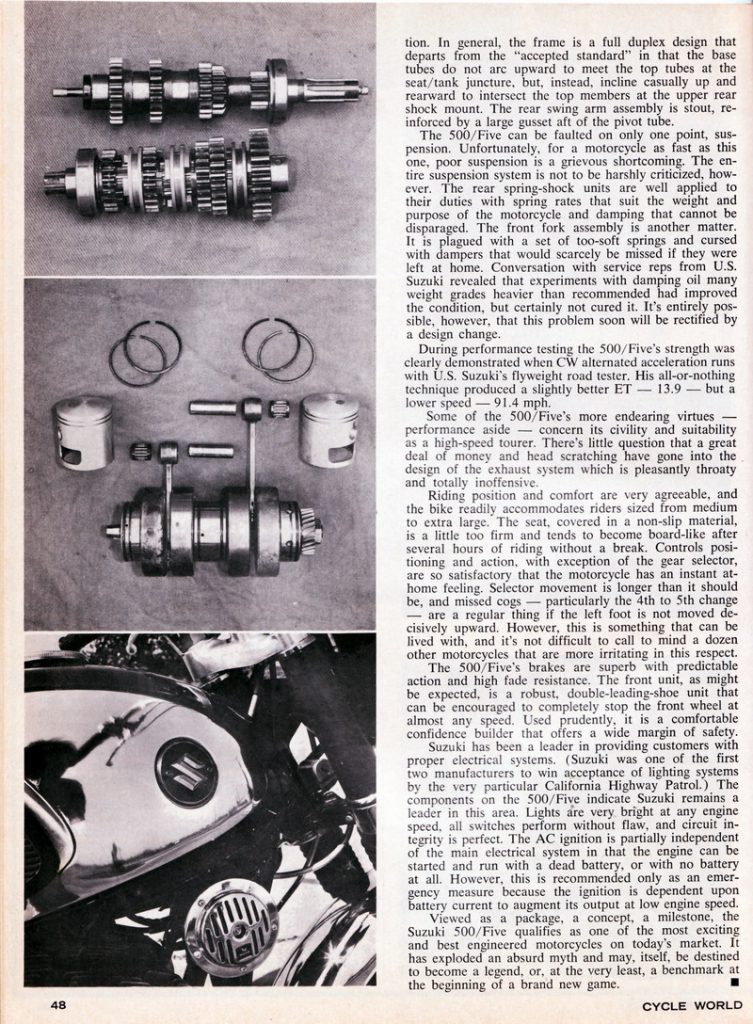
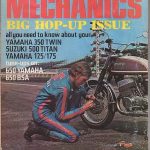
most people got their start on, the Honda 50 Cub step-through tiddler, was still very popular although not anything like it was just 3 or 4 years earlier.Suzuki decided to raise the bar in the motorcycle world somewhat by unleashing a half-litre two stroke twin cylinder motorcycle. With magazine lead times being what they were back then (and probably still are, for all I know) the Cycle World tests/story had to be done in early/mid September to meet the
December issue deadline for the article you see here. Can you imagine the excitement at CW and the competition amongst the staff to get picked to write up this story ?? And in California (the centre of all things new and good), on top of it all !!!Some other large cities (Toronto, NYC, Chicago, Vancouver) in North America, besides LA, probably had the bike in dealers’ showrooms around the time this article was written but for the rest of us…… we were bowled right over when this issue of CW hit the stands in mid November. This was the first time any of us had seen such a bike and what a bike it was.
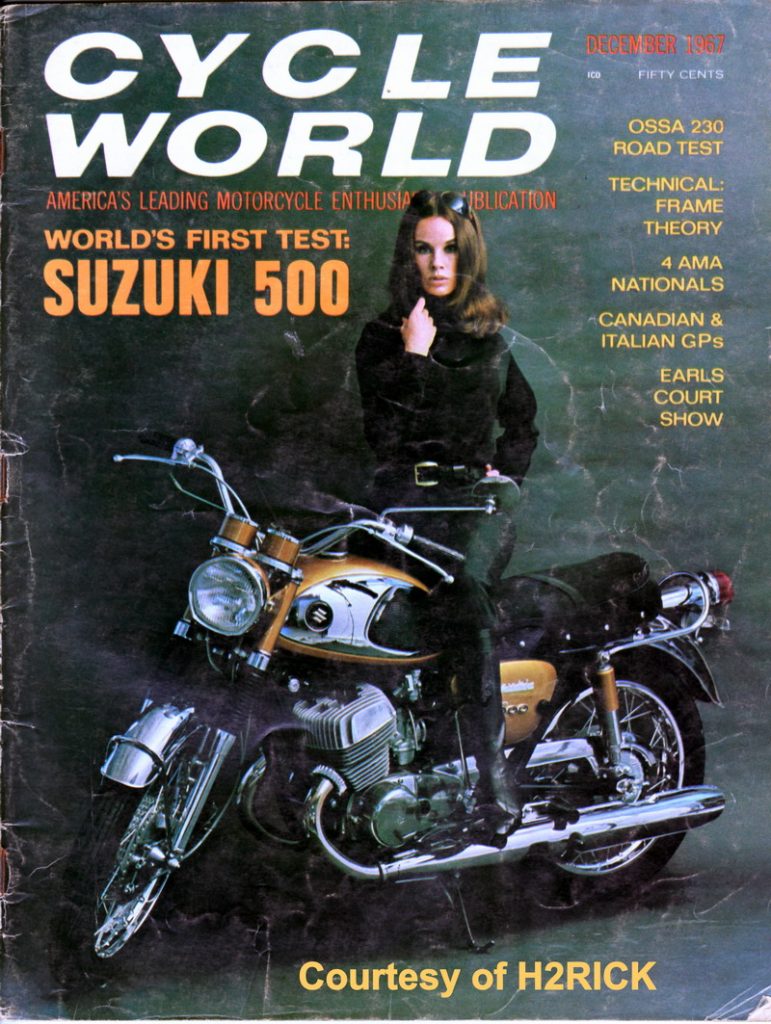
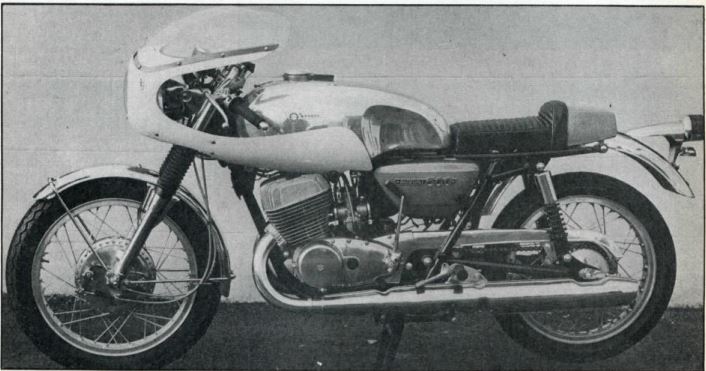
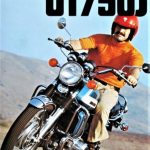
The Cobra was quite a bike for its day as the article makes clear. Unsuspecting, the Cobra would occupy the motorcyling limelight for exactly one year. Multicyclinder offerings from Kawasaki and Honda would eclipse the Cobra in just one short year.
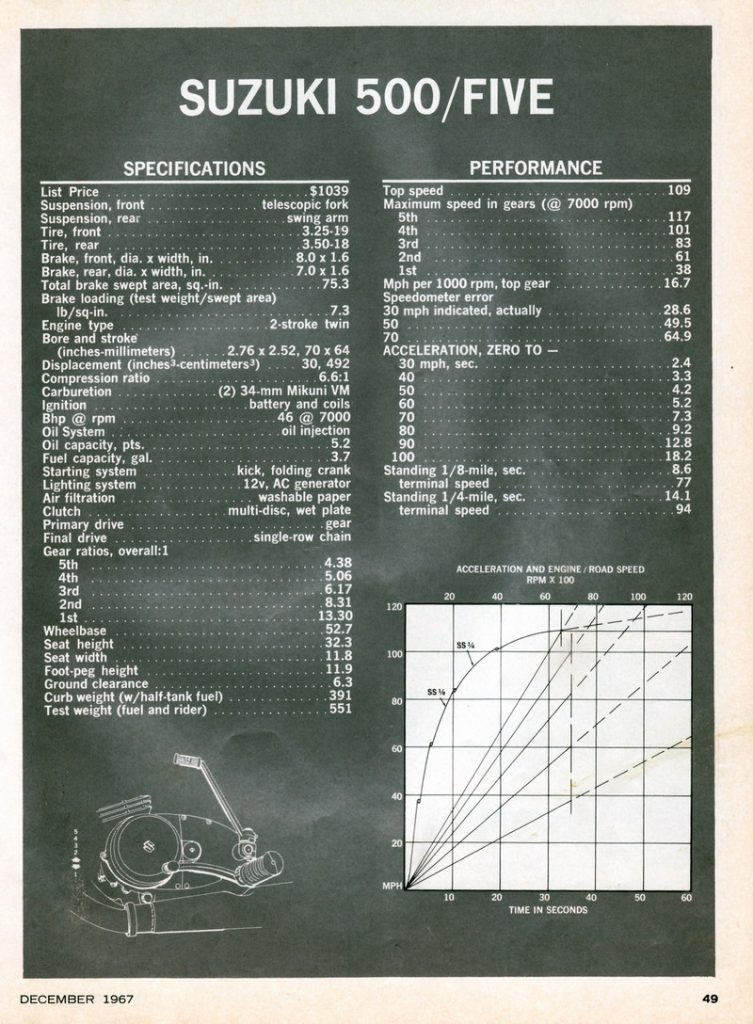
Some said the Cobra was just a big Hustler (X6), which was kind of true….but the main thing was that the engine was BIG. Big for Suzuki, for sure, and big for a two stroke, as no one had been successful with a half-litre capacity air cooled two stroke ever before. The performance was big too, as the CW test panel and writeup shows. How would the whole gamble work out for Suzuki ?? Well, we now know the answers to all these concerns as the Cobra/Titan went on to be the most durable model in Suzuki’s lineup through to the last GT500 in the 1977 model year. Ten model years of production is an eternity compared to the current manufacturers’ practices of changing bikes totally every 3 or 4 model years…..and sometimes more often.
The Cobra/Titan went through very few serious changes in its production life thus showing the rightness and thoroughness of the original design/testing work. The two most important changes were:
– modification of the main engine castings to give better transmission lubrication. This occurred somewhere during the early part of the 1973 model year.
– change of the front forks/brakes over to more modern units with single disk brake at the beginning of the 1976 model year.Other than those two major changes and the usual annual “Detroit-style” colour and trim changes, the Cobra/Titan stayed pretty much as originally designed all the way through to the end of production.
Thousands of them are still on the road today, 35 years after the first one rolled off the assembly line at Suzuki’s Hamamatsu plant. Reasonable purchase price, faithful as a St. Bernard (and easy to fix if something did go wrong), no evil handling vices hidden away in the frame anywhere and capable of running as long as you could sit on the saddle and hang onto the bars. And all this from a type of motorcycle (two stroke) with a reputation for supposedly poor durability. What else could you ask for from any motorcycle ??
This is one of very few “modern” motorcycles with a fairly large and loyal worldwide following of enthusiasts that are still resurrecting, riding, racing and restoring a single model of motorcycle.
Copyright © 2003, R. W. Best (H2RICK)