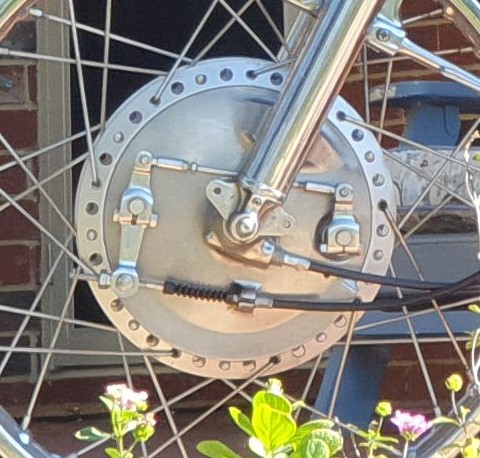
TWIN LEADING SHOE BRAKES
A step by step guide to a super stopper.
1. Assemble all new parts likely to be needed before doing
anything – usually shoes and cable.
2. Remove wheel and note relationship of cams, levers and springs
before stripping back plate completely. If cam ends are not
stamped with an alignment mark, it helps to refit the levers
in the right place to pencil one on before stripping out.
3. Clean all parts of dust and old hard grease. Note the warnings
about Asbestos these days – wipe drum out with damp rag and then
seal rag in a plastic bag, not use the airline on it!
4. Decide which parts to replace wheel bearings,
shoes, springs, cable etc.
5. Assembly – lightly grease cams, and check smooth rotation
in back plate. Fit levers and any return springs in correct
position using marks on end of cams and recheck for smooth rotation.
Pit shoes, ensuring leading edge of linings has a chamfer to prevent
grabbing.
6. Fit back plate to wheel, ensure speedo drive aligns with hub.
Replace wheel in forks leaving all fasteners finger tight.
7. Inspect cable. It cannot be emphasised enough how important
the cable is to a good brake. It must be the correct length, with
smooth flowing bends. Ferrules must fit tightly and nipples and
levers fit snuggly. The tighter a cable has to bend, the more the
outer sheath opens out. This gives a spongy feel when applied as
the outer concertinas under pressure.
8. Push on short arm of the double ended brake lever to apply one
brake shoe. Hold arm in this position by adjusting cable wingnut.
9. Fit balance rod to double ended brake lever. Slacken lock-nut
to allow adjustment of the clevis ends – note one end will have a
left-hand thread.
10. Push on other brake lever with equal force as in (·8) to apply
other brake shoe. Adjust length of balance rod so clevis pin can be
inserted whilst maintaining equal pressure on both shoes. The cams
are now synchronised. Tighten balance rod locknut(s).
11. With brake dragging, rotate wheel to ensure lost motion taken out
of brake anchorage. Apply brake hard to centralise linings and
tighten all axle nuts and clamps. Check all nuts, remember to replace
split pins in clevis pins, axle nut and brake cable end.
12. Adjust brake cable so shoes are not binding, carefully
roadtest and recheck everything for tightness. Now that you can
stop – how about making the bike go faster?
CLIVE LEESON