KADI | 1924-30 | Germany :
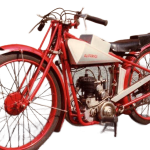
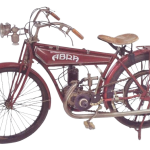
KADI motorcycles were manufactured in Germany from 1924 to 1930. The company built motorcycles using 198cc and 498cc three-valve OHC Küchen engines.
KADI motorcycles were produced in Mannheim, Germany, from 1924 to 1925 according to the German motorcycle marque list, while Tragatsch’s authoritative The World’s Motorcycles 1894–1963 extends production to 1930. The discrepancy between sources — 1924–25 versus 1924–30 — is a recurring feature of documentation for the many small German marques of this period, where some sources record only the years for which trade directory listings, show appearances, or press mentions have been identified, while others draw on additional registration or competition records. The longer date of 1924–1930 from Tragatsch is generally considered the more comprehensive source for German marques of this era.
The name KADI has not been resolved to a full company or proprietor name in accessible sources — it may represent initials of owners or a trade name, following the pattern of many minor German marques of the Weimar period. Mannheim’s industrial character made it a plausible base for a small motorcycle assembler: it was a significant Rhine port and manufacturing city with established engineering and metalworking trades, and it had a direct connection to Richard Küchen, whose career intersected with the city.
The defining technical fact about KADI is its exclusive use of Küchen-designed three-valve OHC engines — the 198cc and 498cc units that represented the most sophisticated proprietary motorcycle engines available on the German market in 1924. Richard Küchen made himself independent in engine construction and production in 1918. His first “K-Motor” was a water-cooled two-stroke. In 1922 came the first “K-four-stroke” — a 350cc OHV single with an unusual oil supply to the valve gear via pushrods with lightweight wood filling. This engine was built first as a two-valve and later as a three-valve unit. From 1924, the K-motors were manufactured by Schiele-Bruchsaler Industriewerke in Baden-Baden, and from 1927 by Maschinenbau-Gesellschaft Heilbronn.
Küchen had success with his programme and, due to great demand, had to hand over fabrication to the Schiele-Bruchsaler Industriewerke in Baden-Baden. From 1924 he supplied 350 to 600cc engines as sports engines for heavy sustained use, with bevel-shaft drive operating face cams or grooved discs. The face-cam — or Kurvenscheibe — system was the distinctive valve actuation mechanism of the Küchen OHC engine. Rather than a conventional rotating lobe camshaft directly operating the valves or rockers, the Küchen design drove a vertical bevel shaft which at its upper end rotated a circular disc with profiled ramps machined into its face. As the disc rotated, these ramps bore against tappets or rocker arms to open the valves in sequence. The three-valve configuration — with one large inlet valve and two smaller exhaust valves, or variations thereof — was chosen to maximise gas flow at the speeds the engine was designed to achieve. A variant of the 350cc three-valve engine held an endurance world record in its class, set in 1925, for many years. The engine was a “K-Motor” three-valve OHC double-port with a vertical timing shaft, designed and distributed by Richard Küchen and produced by Maschinenbau-Gesellschaft Heilbronn. The double-port exhaust configuration — with two exhaust ports serving the three-valve head — was a further performance refinement that reduced exhaust back-pressure and improved scavenging of combustion gases. The two engine sizes and their markets KADI offered its machines in two very different capacities, serving quite different segments of the German motorcycle market.
The 198cc machine placed KADI in the Kleinmotorrad class — the lightweight segment that was the fastest-growing part of the German market in 1924–1930. The Küchen 198cc unit was a three-valve OHC engine of remarkable sophistication for its displacement, at a time when most German lightweights used simple two-stroke engines from DKW, Villiers licensees, or proprietary two-stroke suppliers. A 198cc machine with a three-valve OHC four-stroke engine was an unusual and technically advanced proposition, offering performance and refinement well above what the displacement class normally delivered. It would have appealed to riders who wanted four-stroke smoothness and the prestige of overhead-cam valve gear in a lightweight, economical package.
The 498cc machine was a different proposition entirely — a sports and touring engine positioned to compete with the established half-litre machines from NSU, BMW, and the British imports. The three-valve OHC valve train was available in Sport and Supersport versions, with single and dual exhaust ports. The larger Küchen unit was one of the most technically refined half-litre proprietary engines on the German market, and a KADI fitted with this engine would have been a competitive sports machine capable of matching the output of considerably more established marques. Context: Mannheim and the Küchen connection
The geographical link between KADI in Mannheim and Küchen is significant. Richard Küchen moved to Mannheim in 1915 as a technical draughtsman at Brown & Boveri, then in 1916 to the Badische Maschinenfabrik in Mannheim, and in 1917 to Schütte-Lanz, where airships were built for the imperial air force. His independent engine business, begun in 1918, was therefore rooted in the Mannheim engineering community, and his engines were initially built there before production was subcontracted to Schiele-Bruchsaler Industriewerke in Baden-Baden from 1924. A KADI factory in Mannheim in 1924 would have been operating in the same city where Küchen had built his reputation and his business contacts. It is probable, though not documented, that the KADI proprietors had a direct commercial relationship with Küchen or his agents rather than simply ordering engines through a catalogue — a personal connection that may explain their consistent and exclusive use of his engines across both capacities.
KADI’s production span of six years — if the Tragatsch figure of 1924–1930 is accepted — makes it one of the more durable of the small German assemblers of the period, outlasting the wave of 1924–1925 entrants who succumbed quickly to post-stabilisation competitive pressures. Several factors may explain this relative longevity. The Küchen engine was genuinely distinguished, and a well-made KADI carrying the larger unit would have had genuine competition potential. Richard Küchen at one point was responsible for half of all German proprietary engines, and the prestige of the Küchen name among knowledgeable German motorcyclists would have been a commercial asset.
The period 1924–1930 also saw the Küchen engine itself developing and improving. In 1928 the most famous K-Motor appeared: a three-valve unit in which all three valves were operated by a single cam on a vertically positioned camshaft reminiscent of a bevel shaft, through drag and rocker arms. This 1928 development — the most refined expression of Küchen’s face-cam concept — would potentially have been available to KADI for its later machines, giving the marque access to an increasingly competitive and celebrated engine across its production life. The end of KADI production around 1929–1930 coincides with the onset of the Great Depression and its effects on the German market, as well as Küchen’s own move in 1931 to Triumph in Nuremberg and subsequently to Zündapp, where he shifted focus to larger-volume proprietary engine work.
The withdrawal of direct Küchen involvement from the proprietary engine market, and the economic contraction of 1929–1930, together created conditions that would have made sustaining a small premium motorcycle operation commercially untenable. Significance KADI represents a small but technically serious contribution to the German motorcycle industry of the 1920s. Its consistent use of two sizes of the most sophisticated proprietary OHC engine available in Germany, across a production run of up to six years, distinguishes it from the simple assembled lightweights that dominated the mid-1920s German market. Küchen engines powered Aeros, Ardie, Atlantis, Carnielli, Meyra, Tornax, Vittoria, WMR and many other motorcycles, and KADI was part of this community of builders who recognised in the Küchen three-valve OHC unit an engine of genuine quality and potential. That a face-cam variant of the Küchen engine held an endurance world record in its class is evidence that the technical foundations of the KADI motorcycles were sound — whatever the commercial limitations that eventually brought production to a close.