KÖBO | 1923-26 | Germany :
The KÖBO motorcycle emerged from a company whose primary expertise was in a component that every chain-driven motorcycle in the world depended upon, and whose name encoded the identity of its founders in a way that proved more durable than the machines themselves.
The company was founded in Wuppertal, Germany by Hermann Bovenkamp and Dietrich Lentzen in 1894. In 1899 the company name KÖBO was established, using the first two letters of the last names of the two owners Emil Köhler and Hermann Bovenkamp. The production of chains and chain wheels began, as well as the development of a standardised production process for roller chains that is still used worldwide today.
Emil Köhler left the company in 1912. Hermann Bovenkamp stayed on and was named sole owner of KÖBO. It was therefore under Bovenkamp’s sole direction that the company entered motorcycle manufacture in 1923, a decade after the original partnership had dissolved.
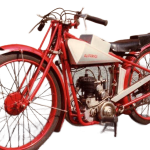
Both Wuppertal and Barmen-Hatzfeld are associated with the history of the marque. The company built motorcycles using their own 276cc two-stroke engines but ceased production during the period of hyperinflation, as did a great many other motorcycle manufacturers in Germany.
The decision by a chain manufacturer to build motorcycles was not without industrial logic. A company that had spent nearly three decades perfecting and standardising the production of precision roller chains, and that supplied its products to the motorcycle industry as a matter of course, had detailed knowledge of how motorcycles were constructed and what they required mechanically. The step from supplying chains to assembling machines around their own two-stroke engine was a significant one, but it drew on genuine engineering competence.
The choice to manufacture a 276cc two-stroke was characteristic of the accessible end of the German market at this moment, where small-capacity singles powered by engines of the company’s own making represented the most common formula for a new entrant attempting to avoid dependence on established engine suppliers such as DKW, Bekamo or Grade.
The years 1923 to 1926 were those in which German hyperinflation first destroyed and then stabilised, and many motorcycle producers that had entered the market in the early 1920s did not survive the transition. For KÖBO, the motorcycle chapter closed, but the chain manufacturing company continued on a very different trajectory. Hermann Bovenkamp’s sons Hermann, Max, Paul and Arthur joined the company in 1935. The firm grew substantially in the post-war decades, ultimately establishing production facilities in Germany, Poland and China, and its standardised chain production process remained in commercial use into the twenty-first century. The motorcycles of 1923 to 1926 are a footnote in that long industrial history, noted now mainly because the company that made them proved so much more enduring in its original trade than in the brief detour into powered two-wheelers.